Improving Maternal & Newborn Health
The Partnership Program for Comprehensive and Integrated Maternal and Newborn Health Improvement is a five-year initiative supported by Bloomberg Philanthropies and the Gates Foundation. It aims to accelerate reductions in preventable maternal and newborn deaths and help Tanzania advance towards its 2030 health and Sustainable Development Goal commitments.
The program will improve access to high quality, respectful Emergency Obstetric and Newborn Care (EmONC), safe anesthesia, intensive care, and critical care services across 157 health facilities in Geita, Katavi, and Kigoma. Working closely with the Ministry of Health, the President’s Office Regional Administration and Local Government, regional and council health teams, professional associations, and communities, the initiative will strengthen the health system from primary facilities to referral hospitals.
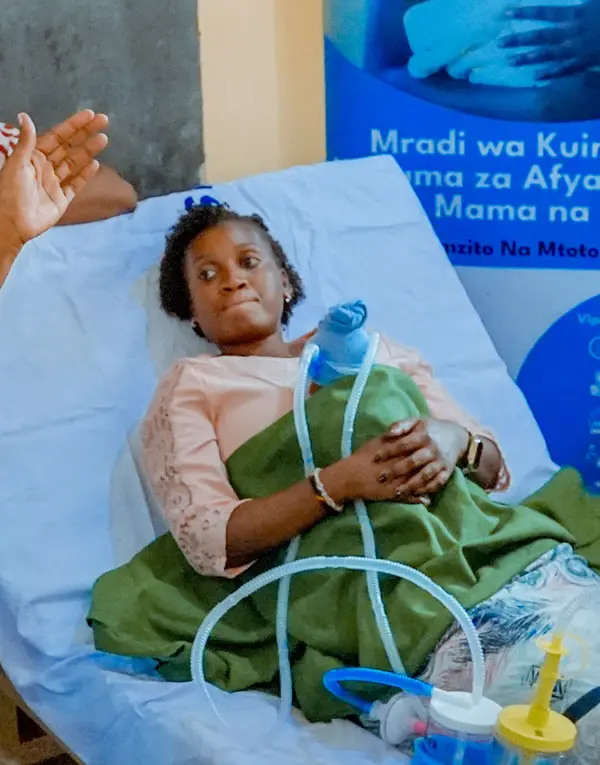
At facility level, the program will improve readiness to manage obstetric emergencies, newborn complications, and critical illness. Support will include essential equipment and life-saving supplies, minor renovations where needed, stronger supply chains, and competency-based training for at least 250 healthcare workers. Providers will build practical skills through clinical attachments, mentorship, simulation-based learning, skills laboratories, continuing medical education, and supportive supervision.

Strengthening Referral Networks
A hub and spoke approach will strengthen referral networks and promote continuous learning. Bugando Medical Centre will serve as a tertiary training hub, while Maweni Regional Referral Hospital, Kasulu District Hospital, and Kiganamo Health Centre will be strengthened as centres of excellence for EmONC, safe anesthesia, and critical care. These sites will provide hands on mentorship, clinical exposure, and learning opportunities for health workers from lower level facilities.
Improving Referral and Emergency Response
The program will also improve referral and emergency response systems. Four ambulances will be equipped for supportive care, escorting providers will receive specialised training, and the M-mama dispatch platform will help connect women and newborns to timely referral services. Community Health Workers will support outreach and encourage early care seeking, particularly for women and newborns at risk.
The program will also improve referral and emergency response systems. Four ambulances will be equipped for supportive care, escorting providers will receive specialised training, and the M-mama dispatch platform will help connect women and newborns to timely referral services. Community Health Workers will support outreach and encourage early care seeking, particularly for women and newborns at risk.
Quality improvement will be central to implementation. The program will strengthen Maternal and Perinatal Death Surveillance and Response, clinical audits, maternal death reviews, teleconsultations, emergency support calls, and routine use of data for decision making. It will also support the rollout of the World Health Organization Labour Care Guide to improve respectful, evidence based intrapartum care.
In partnership with obstetric, midwifery, and anaesthesia professional associations, the initiative will help develop, update, and disseminate national policies, clinical guidelines, standard operating procedures, job aids, registers, and learning resources. These tools will be integrated into pre-service and in-service training to promote sustained adoption across Tanzania.
By aligning investments with government systems, strengthening institutions, and linking training to quality improvement in facilities, the program will create lasting capacity to deliver safer, more respectful care for mothers and newborns.